The Real Cost of SaaS, and why it’s finally being questioned.
May 12, 2026 by Jonathan Clitheroe
SaaS isn’t failing; the economics are
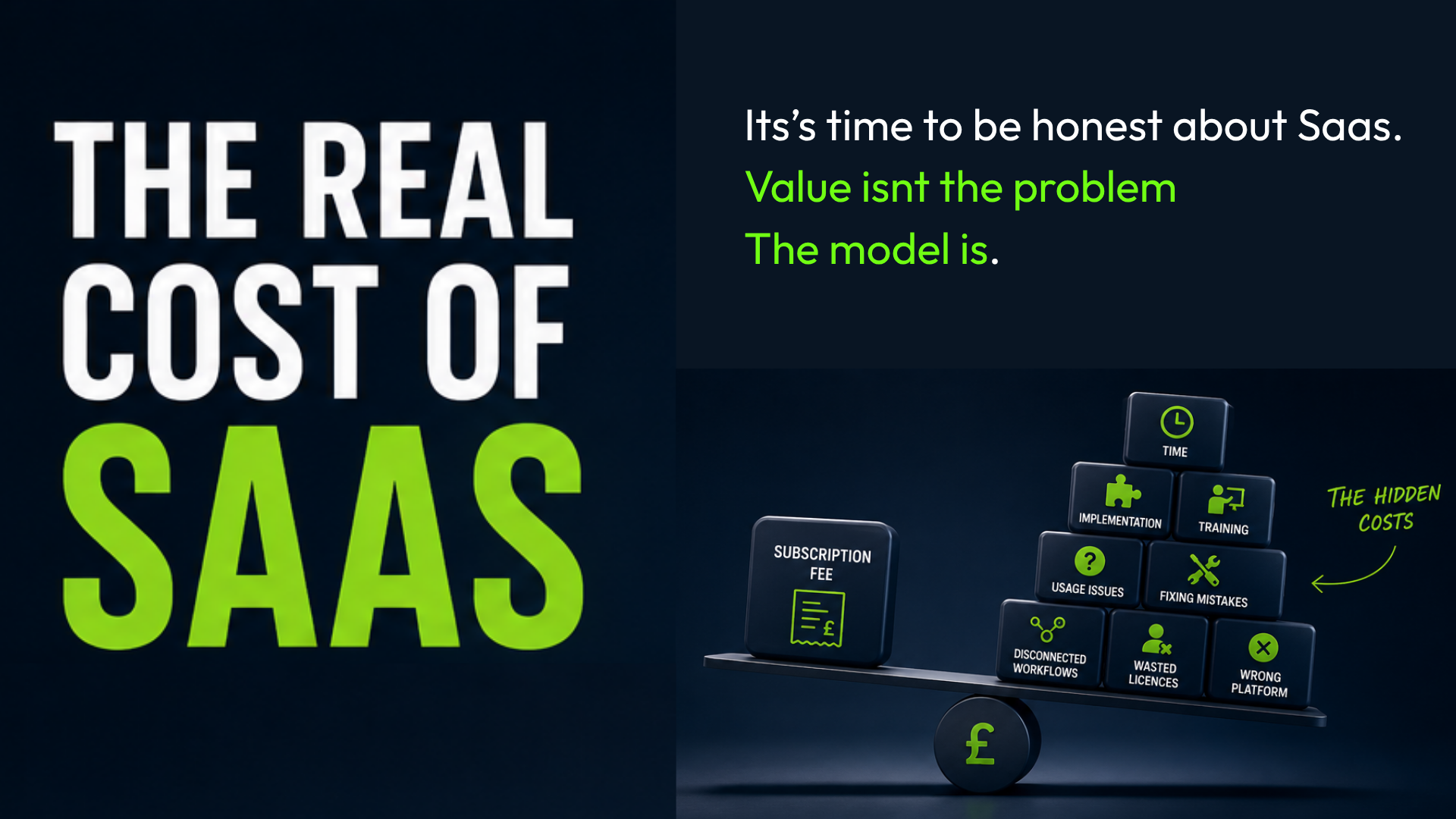
It’s time to be honest about SaaS. The so called “SaaS-pocalypse” isn’t happening because software stopped being valuable. It’s happening because, for years, SaaS has been overpriced. Not accidentally. Structurally.
Subscription is only half the cost
When organisations think about SaaS cost, they usually focus on the subscription. But that’s only half the story.
The real cost has two parts: the fee you pay, and everything it takes to make the software actually work. And that second part is where things spiral.
Time spent choosing the right platform, implementing it, training teams, trying to use it, not using it, fixing mistakes, and sometimes realising you bought the wrong thing altogether. In many cases, the internal cost outweighs the software itself.
Why SaaS became so expensive
So why is SaaS so expensive?
Because pricing isn’t really based on cost, it’s based on investor expectations.
SaaS is one of the few industries where there’s very little relationship between what it costs to deliver a product and what customers are charged. Investors expect extremely high margins, often 80–90% or more.
That means human support is minimised, pricing is pushed as high as possible, and “self-serve” becomes the default whether it works for customers or not.
SaaS companies don’t charge what they need to charge — they charge what they have to charge to meet growth expectations.
Not all SaaS is the same
That said, not all SaaS is the same.
Some platforms absolutely justify their cost. If a product delivers clear, measurable ROI, solves a genuinely unique problem, and invests heavily in customer success, then higher pricing makes sense.
You’re paying for impact, but much of the market doesn’t look like that.
There are thousands of tools with similar features, little differentiation, minimal support, and no real accountability for results — yet they charge the same as those that do deliver.
The SaaS model that is starting to break
The SaaS companies that are starting to struggle aren’t all software companies.They’re the ones charging premium prices without offering something truly essential, and without investing in helping their customers succeed. That model is starting to break.
Buyers are starting to ask better questions
or buyers, this creates a much clearer lens.
If a platform is genuinely driving ROI and no cheaper alter
Fnative can match it, pay the price.
If you’re not getting ROI, stop paying.
And if you are getting results, but those results are coming from your team rather than the tool itself, then it’s worth questioning what you’re actually paying for.
Because in that case, the value isn’t the software — it’s your people.
Shift towards lower-cost, support-first SaaS
We’re starting to see a shift towards a different kind of SaaS model: more transparent pricing, lower barriers to entry, support built in rather than sold separately, and costs that are more aligned with actual value.
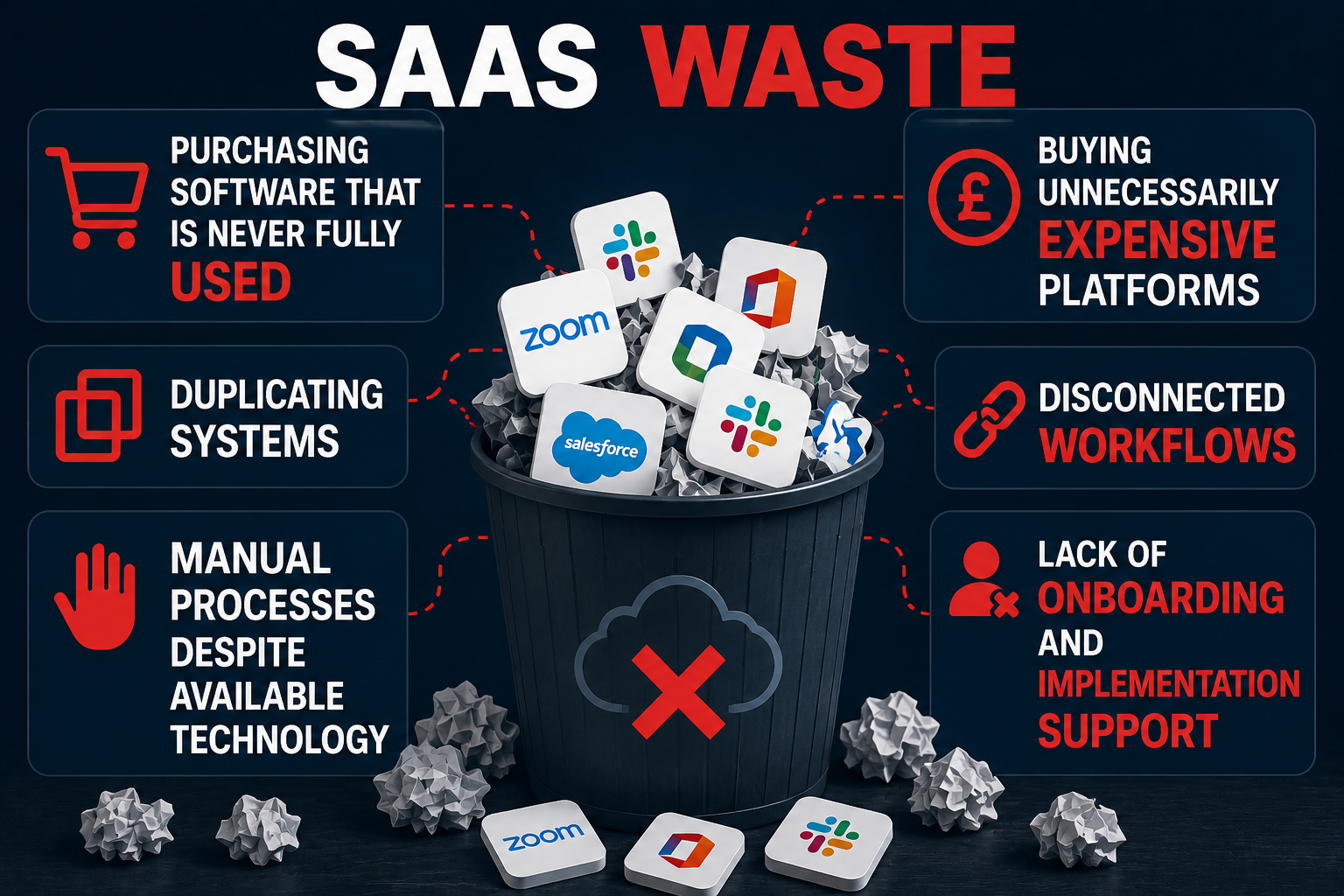
Because the biggest waste in SaaS isn’t bad software. It’s software that never gets used.
If your organisation is reviewing its technology, struggling with software adoption, or looking for more practical and affordable ways to improve delivery, we’d love to connect.
You can learn more about our work, services and Credsuite ecosystem at: www.sisimpact.org